hello world!

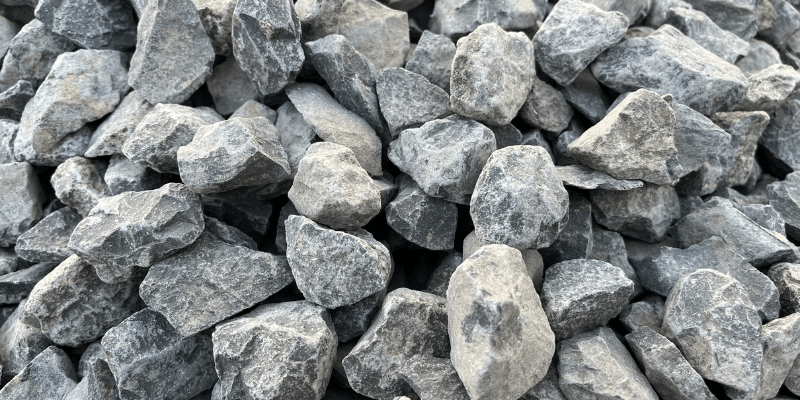
Landscaping aggregates are the crushed stone, gravel, sand, and decorative rock that form the functional backbone of nearly every outdoor project. They create stable bases, move water where it needs to go, and finish a garden with colour and texture. Choosing the right one comes down to a single question: what job does the material need to do? This guide breaks down the main types of landscaping aggregates by function.
Hamilton Builders' Supply carries a full range of landscaping aggregates in both bagged and bulk form. The sections below cover what each type does best, from structural bases hidden underground to the decorative stone that finishes a space.
Key Takeaways
Tell us what you’re working on and our team will help you source the right landscape and building supplies for your project anywhere in Southern Ontario.
Landscaping aggregates are granular materials, either crushed from quarried rock or naturally weathered, used across construction and landscaping. The University of Waterloo Earth Sciences Museum notes that sand, gravel, and crushed stone are all aggregates, and that the sector is Ontario's largest natural resource industry. The Ontario government notes that aggregates such as sand, gravel, clay, and bedrock are used to build roads and other structures, while granular materials also play an important role in roadbed construction and drainage. The same base and drainage principles apply at a smaller scale in a backyard patio or garden path.
Every durable hardscape starts with a compacted base hidden below the surface. These aggregates carry the load and prevent the shifting and settling that ruins a project over time.
Granular A is a compactable blend of sand and crushed rock that packs into a cohesive, load-bearing layer. It is the primary base material for driveways and roadway-style foundations, where a stable, well-knit sub-base is essential.
Robust and sizable, 3/4" stone acts as a sub base for concrete driveways and holds up well under pressure. Its size also makes it ideal for drainage applications.
Fine crushed stone or limestone screenings are the preferred choice for a stable, level bed directly beneath paving stones and walkways. On a natural stone patio, screenings are what keep every slab sitting flat and even underfoot.
This pre-blended mix of sand and stone saves time on masonry and general construction tasks, offering a ready-to-use base material for a range of jobs.
Poor drainage undermines walls, foundations, and plantings. These aggregates create the open voids that let water flow through rather than pool.
High-performance bedding is washed, crushed limestone built for drainage. It works as a drainage layer under walls or slabs, as backfill behind small retaining walls, and around swimming pools. Clean drainage stone behind a wall relieves the water pressure that causes failure, which is one of the core retaining wall design requirements for a structure that lasts.
Consistently sized and versatile, 3/8" or 1/2" stone works across both construction and decorative projects, valued for its stability and clean, uniform appearance. That same consistent sizing lets water pass freely, which is why it also suits drainage settings.
Pea gravel is made of small, naturally smoothed stones with rounded edges. It handles light drainage well and doubles as a comfortable surface for pathways and play areas, coming in a range of colours to suit different palettes.
Decorative aggregates deliver colour, texture, and contrast while doing practical work like suppressing weeds and holding soil moisture. They pair naturally with natural stone landscaping features elsewhere in the yard.
River stone enhances shrubs, entrances, and terraces while limiting weed growth and helping soil retain moisture. Its smooth, natural look makes it one of the most versatile decorative options, and many homeowners use it in place of mulch for a longer-lasting finish that does not break down each season.
Named for its large, rounded, potato-like shape, this stone adds rustic charm to beds and features where a bolder, chunkier look is wanted.
Red granite brings a vibrant, warm hue to beds and paths, black granite lends a sleek, modern contrast, and coastal gold pebbles add a smooth, sun-toned finish. White stone offers a luminous, tumbled look that stands out against dark mulch and green foliage.
Red crushed brick brings warm colour and texture in two grades. The finer 3/8" grade suits garden beds and pathways, while the heartier 3/4" grade holds up for driveways and landscaping highlights.
Sand plays a quiet but critical role in landscaping and masonry. Brick sand is a fine, light-coloured sand ideal for mixing smooth mortar to lay brick and block. Concrete sand is coarser and grittier, giving concrete mixes the granularity they need for a strong bond.
A few factors guide the choice for any project.
| Factor | Why It Matters |
| Purpose | Base, drainage, and decorative jobs each need different properties. |
| Size | Larger stone drains better; finer material compacts and levels. |
| Shape | Angular stone locks together; rounded stone stays loose for drainage. |
| Colour and texture | Decorative choices should complement the home and existing features. |
Beyond these material properties, site conditions like existing soil and local climate shape the decision, which is where advice from a local supplier saves time and cost.
Tell us what you’re working on and our team will help you source the right landscape and building supplies for your project anywhere in Southern Ontario.
A few common questions come up again and again when homeowners are choosing landscaping aggregates for a project.
Landscaping aggregates are most commonly used for decorative pathways, garden texture, retaining wall backfill, play areas, water feature accents, and as a low-maintenance alternative to mulch. Their range means one material or another fits almost any outdoor job.
Aggregates improve the look of a property while reducing soil erosion, enhancing drainage, suppressing weed growth, and conserving water. Many also require little upkeep once properly placed, which saves time and money over the years.
High-quality aggregates that are professionally placed need very little maintenance. Occasional raking, levelling, or topping up keeps them looking their best and performing as intended.
Angular aggregates, like crushed stone, have sharp edges that lock together for stability, which makes them ideal for bases and structural drainage. Rounded aggregates, like pea gravel and river stone, stay loose, which suits light drainage and decorative surfaces.
The best landscaping aggregate is always the one matched to the job, whether that is a compacted base under a new driveway, a drainage layer behind a wall, or decorative stone that finishes a garden bed. Getting the size, shape, and type right from the start is what makes a project perform and last.
Hamilton Builders' Supply has supplied landscaping and building materials across Southern Ontario for over a century, in both bagged and bulk quantities with delivery available. Visit one of our locations in Hamilton, Burlington, Winona, and St. Catharines to see materials in person, or contact us for a quote on your project.